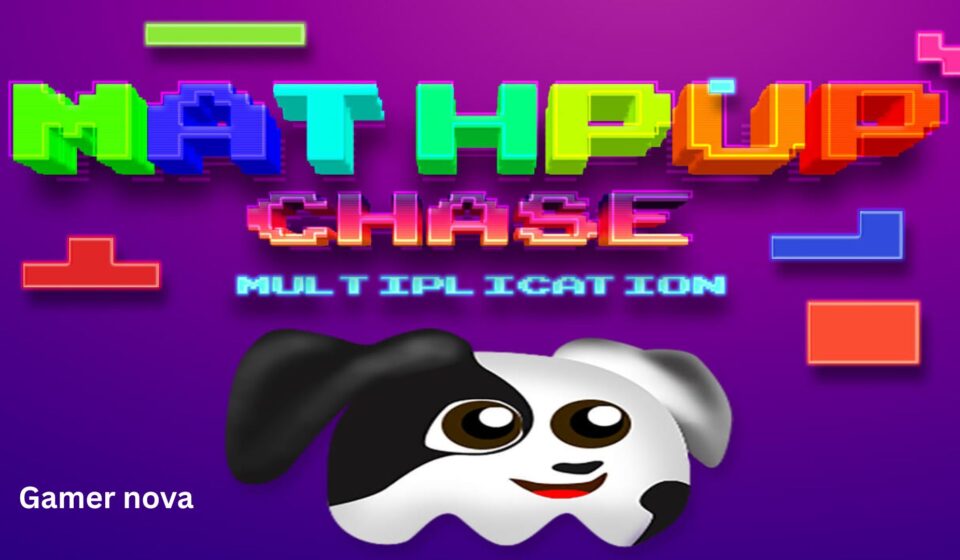

Let’s face it—math can sometimes feel like a chore. Worksheets. Timed tests. Repetitive drills. But what if learning addition, factoring, and place value felt more like playing a game than doing homework? What if a cute, adventurous puppy guided you through every problem?
Meet MathPup, the star of a delightful series of educational browser games from MathNook. This clever canine has one mission: to help players of all ages master essential math skills while having a blast. Whether you are chasing a cat burglar by solving addition problems, swinging through the air to grab factor bones, or measuring distances to build the perfect bridge, MathPup turns abstract concepts into tangible, exciting challenges.
The MathPup series is not a single game—it is a collection of dozens of titles, each focusing on a different math skill. From MathPup Draw Factors to MathPup Hook Place Value to MathPup Math Adventure, there is a game for every learner. The best part? You can play online directly in your browser. There is no software to install, no account to create, and no cost. These free browser games work on your computer and are also mobile web compatible for iOS and Android devices.
In this guide, we will explore the world of MathPup. We will explain the core gameplay mechanics across different titles, highlight what makes this series unique, and share tips for beginners. Whether you are a parent looking for educational screen time, a teacher seeking classroom resources, or a student who wants to practice math without boredom, MathPup is here to help.
What Is MathPup? Game Series Overview
MathPup is a series of educational puzzle and arcade-style games developed by MathNook, a trusted creator of online learning tools. The games are built using HTML5 and Javascript, ensuring smooth performance on any modern browser.
Unlike many educational games that feel like disguised worksheets, the MathPup series integrates math problems directly into engaging gameplay mechanics. You are not just answering questions on a static screen—you are guiding a character through levels, swinging on ropes, drawing paths, or timing jumps.
The Core Concept
Across all MathPup games, the basic formula is consistent: solve a math problem correctly to help MathPup achieve his goal. The specific goal varies by game:
- Math Dog Addition / Integer Addition: Catch the cat burglar by selecting the correct answer to an addition problem (positive and negative numbers included).
- MathPup Draw Factors: Draw a path to guide MathPup to the correct factor bones based on the factor statement at the top of the screen.
- MathPup Bridge: Fill in missing pattern pieces to complete the bridge so MathPup can cross safely.
- Stick MathPup: Measure the distance between islands using a ruler, then grow a stick of the exact length so MathPup can cross to the dog bone.
- MathPup Hook Factors / Place Value: Use a rope and swing mechanics to bounce MathPup to the number ball containing the correct factor or place value answer while avoiding wrong answers.
- MathPup Math Adventure: Navigate through levels, gathering numbers in the correct order to solve problems and find the exit before the timer runs out.
Difficulty Levels and Timers
Many MathPup games offer three skill levels (easy, medium, hard) and the option to play timed or untimed. This flexibility makes the series accessible to beginners while still providing a challenge for advanced learners.
Featured Games and Gameplay Mechanics
1. Math Dog Addition & Integer Addition
Objective: Help MathPup catch the cat burglar hiding behind the correct answer to an addition problem.
Gameplay: A math problem appears at the top of the screen. Several boxes contain possible answers. You must tap or click the correct answer to reveal the robber.
What makes it fun: The cat burglar theme adds a lighthearted “detective” element. The game includes both positive and negative integer addition, making it suitable for older students as well.
2. MathPup Draw Factors
Objective: Draw a path to guide MathPup to the correct factor bones based on the factor statement shown.
Gameplay: At the top of the screen, you see a factor statement (e.g., “Factors of 12”). Scattered around the level are bones labeled with numbers. You draw a continuous path using your mouse or finger, and MathPup follows that path to collect only the correct factor bones.
What makes it fun: The path-drawing mechanic feels creative and open-ended. There are 20 levels, and no time limit, so you can experiment.
3. MathPup Hook Factors & Place Value
Objective: Swing MathPup to the number ball that answers the factor or place value statement while avoiding wrong answers.
Gameplay: MathPup hangs from a rope. You hold down the mouse button, spacebar, or touch screen to attach the rope to the nearest support. Release to swing. You must time your release so MathPup swings or bounces off bumpers to hit the correct number ball.
What makes it fun: The physics-based swinging mechanic is genuinely challenging and satisfying to master. It feels like an arcade game that happens to teach math.
4. Stick MathPup
Objective: Measure the distance between islands and grow a stick of the exact length so MathPup can cross to the dog bone.
Gameplay: A ruler appears on screen. You measure the gap between two islands. Then you press and hold the “Go” button to grow a stick, releasing when the stick reaches the correct length. If the stick is too short or too long, MathPup falls in the water. You earn 2 points if you avoid smashing the dog bone, 1 point otherwise.
What makes it fun: The measurement mechanic is tangible and visual. It teaches estimation and precision in a way that feels like a game show challenge.
5. MathPup Math Adventure
Objective: Navigate through levels, gathering numbers in the correct order to solve math problems and find the exit before the timer runs out.
Gameplay: You control MathPup moving through colorful environments. At each level, math questions appear. You must collect numbers in the correct sequence to fill in blanks. Answer all questions correctly to unlock the key to the next level. Running out of time forces you to restart or watch an ad for extra 30 seconds.
What makes it fun: The adventure format gives a sense of progression and story. The timer adds gentle pressure without being overwhelming.
Controls (Across the Series)
Controls vary by game, but most share common patterns:
Key Features That Make MathPup Unique
1. Learning Disguised as Play
The MathPup series never feels like a lecture. The math problems are integrated so naturally into the gameplay that you may forget you are “practicing.” This is the hallmark of effective educational game design.
2. Wide Range of Math Topics
The series covers:
- Addition (including integers)
- Factoring
- Place value (including decimals)
- Patterns
- Measurement
- Expanded form
3. Multiple Skill Levels and Timed Options
Most games offer three difficulty levels and the choice of timed or untimed play. This makes the same game suitable for a second-grader learning basic addition and a sixth-grader reviewing integer operations.
4. Physics-Based Challenges
Games like MathPup Hook Factors and Stick MathPup incorporate real physics mechanics (swinging, bouncing, measuring). This adds an arcade-style skill element that keeps players engaged beyond the math component.
5. No Time Limit in Many Games
For learners who need extra time to think, many MathPup games have no time limit. You can sit with a problem, work it out, and make your move when you are ready. This reduces math anxiety significantly.
6. Completely Free and Accessible
All MathPup games on MathNook are free to play. No subscription, no in-app purchases, no paywalls. They work on any device with a browser.
Tips for Beginners
New to the MathPup series? Here are five tips to get started.
1. Start with Untimed Mode
If a game offers a timed mode, ignore it at first. Select untimed and take as long as you need to understand the mechanics and solve the problems. Speed will come with practice.
2. Read the Instructions Before Playing
Each MathPup game has unique controls. The “Draw Factors” game requires path drawing; the “Hook” games require timing your rope release. Spend 30 seconds reading the instructions to avoid frustration.
3. Use the Lowest Skill Level First
Choose easiest difficulty for your first playthrough. The problems will be simpler, allowing you to focus on learning the game mechanics. Once you are comfortable, increase the difficulty.
4. In Hook Games, Watch the Number Balls
At the start of each round in MathPup Hook games, the number balls always appear in the top half of the screen. Use this knowledge to position your first swing. Do not rush—observe where the correct answer is located before you attach the rope.
5. In Draw Factors, Be Precise
When drawing a path for MathPup, make sure your line is continuous. Gaps will stop MathPup. You can draw lines at nearly vertical angles, and MathPup can jump up them if you use the jump button. Use this to reach high platforms.
Is MathPup Suitable for You? (Audience Analysis)
For Kids (Ages 6-12)
Yes, absolutely. MathPup games are specifically designed for elementary and middle school students. The colorful graphics, cute protagonist, and game-like mechanics make practice feel like play. The absence of violence or inappropriate content makes it safe for school and home use.
For Casual Players (Adults)
Yes, for brain training. Adults looking to keep their math skills sharp or simply enjoy casual puzzle games will find the MathPup series engaging. The integer addition and factoring games, in particular, offer a genuine mental workout.
For Hardcore Gamers
No. MathPup is not designed for hardcore gamers seeking complex narratives or competitive multiplayer. It is an educational tool first. However, high-score chasing in timed mode can provide some replay value.
For Teachers and Parents
Yes, highly recommended. MathPup games are excellent classroom resources or homework alternatives. They require no setup, work on school computers and tablets, and align with standard math curricula (addition, factoring, place value, patterns, measurement).
Verdict by Audience
| Audience | Suitability | Notes |
|---|---|---|
| Kids (6-12) | ✅ Very high | Designed for this age group |
| Teens (13-17) | ✅ Moderate | Good for review or remediation |
| Adults (casual) | ✅ Moderate | Fun brain training |
| Hardcore gamers | ❌ Low | Not challenging enough |
| Teachers/Parents | ✅ Very high | Excellent free educational resource |
Frequently Asked Questions (FAQ)
1. Do I need to download anything to play MathPup games?
No. All MathPup games are free browser games that run on HTML5. You can play them directly in your browser. There is no software to install, no app to download, and no registration required. They work on desktop and mobile browsers.
2. Are MathPup games really free? Are there in-app purchases?
Yes, they are completely free. MathNook offers all MathPup games at no cost. There are no in-app purchases, no premium features locked behind paywalls, and no subscriptions. Some versions on third-party sites (like CrazyGames) may offer optional ads to gain extra time, but the core games remain free.
3. What math topics do MathPup games cover?
The series covers a wide range of elementary and middle school math topics:
- Addition (basic and integer)
- Factoring
- Place value (whole numbers and decimals)
- Patterns
- Measurement (using a ruler)
- Expanded form (notation, factors, exponential)
4. Can I play MathPup games on my phone or tablet?
Yes. All MathPup games are mobile web compatible and work on iOS and Android devices. Touch controls vary by game:
- Math Dog: Tap the answer box.
- Draw Factors: Touch, hold, and drag to draw paths.
- Hook games: Touch and hold the screen to attach rope; lift to swing.
- Math Adventure: Use on-screen buttons.
5. Is there a way to track my child’s progress?
MathPup games on MathNook do not have built-in progress tracking or accounts. They are designed for casual practice, not formal assessment. However, you can sit with your child and observe which levels or difficulty settings they can complete. For more structured tracking, consider using the games as informal check-ins.
6. What is the difference between Math Dog and MathPup?
“Math Dog” and “MathPup” refer to the same character. Some games use the name Math Dog (e.g., “Math Dog Addition”), while others use MathPup (e.g., “MathPup Draw Factors”). Both are the same lovable canine. Do not be confused if you see both names.
7. I finished all levels in a game. Are there more?
Yes. The MathPup series includes dozens of titles. If you complete one game (e.g., all 20 levels of Draw Factors), try another:
Each game teaches a different skill. You can find the full collection on MathNook’s website.
Conclusion
The MathPup series proves that educational games do not have to be boring. By wrapping essential math skills in engaging, varied gameplay mechanics, MathNook has created a resource that students actually want to use.
Whether you are swinging through the air to grab factor balls, drawing careful paths to collect factor bones, or measuring sticks to cross treacherous gaps, you are practicing math without even realizing it. The cute, determined puppy at the center of it all makes every success feel rewarding.
For parents and teachers, MathPup offers a free, accessible, and effective way to supplement math education. For students, it offers a fun break from worksheets that still sharpens the mind. And for casual gamers, it offers a relaxing, brain-training diversion.
Because these are free browser games with no download required, there is no barrier to entry. Pick a game. Start with easy mode, untimed. Get to know MathPup. And discover that math can actually be fun.