
Introduction
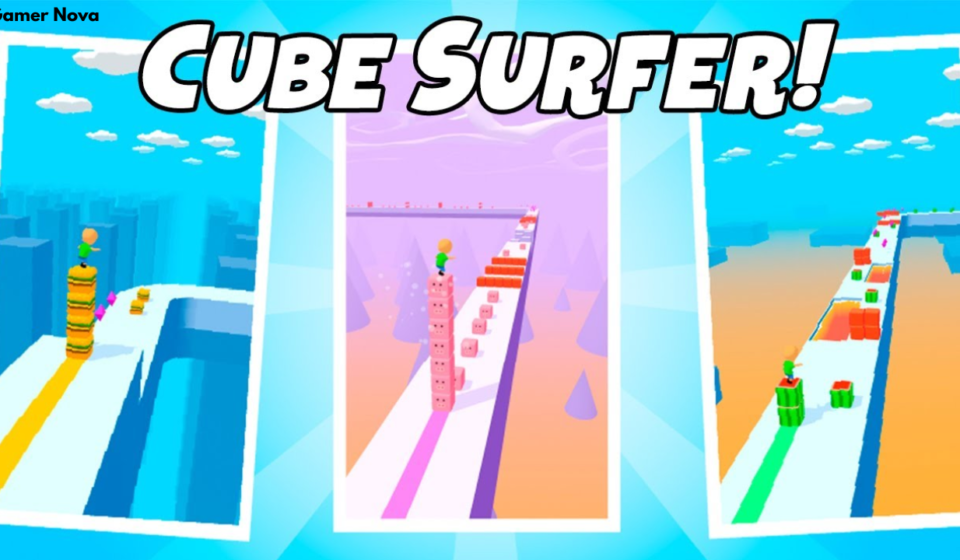
In the vast and ever-expanding universe of mobile and browser gaming, few genres have captured the public’s imagination quite like the endless runner. Among the countless titles that vie for players’ attention, Cube Surfer has carved out a unique and beloved niche. Developed by YAD.Com, this 3D running game distinguishes itself not only through its vibrant, blocky aesthetic but also through a core mechanic that is both simple to grasp and surprisingly deep: the ability to stack cubes. This feature transforms a standard obstacle-dodging experience into a strategic challenge of collection and growth.
Cube Surfer is more than just a game; it’s a test of reflexes, spatial awareness, and forward-thinking. Its intuitive controls make it accessible to players of all ages, while its increasingly complex levels offer a genuine challenge for those looking to master it. The game’s visual style is clean, colorful, and engaging, drawing players into a world where a simple cube can become a towering pillar of success, or a single misstep can send it all crashing down. The core premise is a classic “easy to learn, hard to master” formula that has made it a staple on gaming platforms worldwide.
This guide is designed to be your comprehensive companion to the world of Cube Surfer. Whether you’re a newcomer just learning the controls or a seasoned player looking to dominate the leaderboards, we will cover everything you need to know. From the fundamental mechanics of stacking and dodging to advanced strategies for conquering the most difficult levels, consider this your ultimate handbook for becoming a Cube Surfer champion.
Understanding the Core Gameplay of Cube Surfer
The Premise: A Race Through a World of Cubes
At its heart, Cube Surfer is a 3D running game. You control a small cube that is constantly moving forward along a track. The track, however, is not a simple, straight path. It is littered with obstacles, gaps, and, most importantly, other cubes. Your primary task is to navigate this challenging environment for as long as possible. The ultimate goal is to progress through a series of levels, each with its own unique layout and set of challenges.
The game’s charm lies in its simplicity. The story is minimal, and the action is immediate. You are a cube in a vibrant world, and your goal is to run, collect, and survive. This lack of complex narrative is a deliberate choice; it allows the player to focus entirely on the gameplay, which is intuitive, responsive, and deeply satisfying. The focus is squarely on your skill and reaction time, making each run a personal challenge.
The Core Mechanic: Stacking Cubes
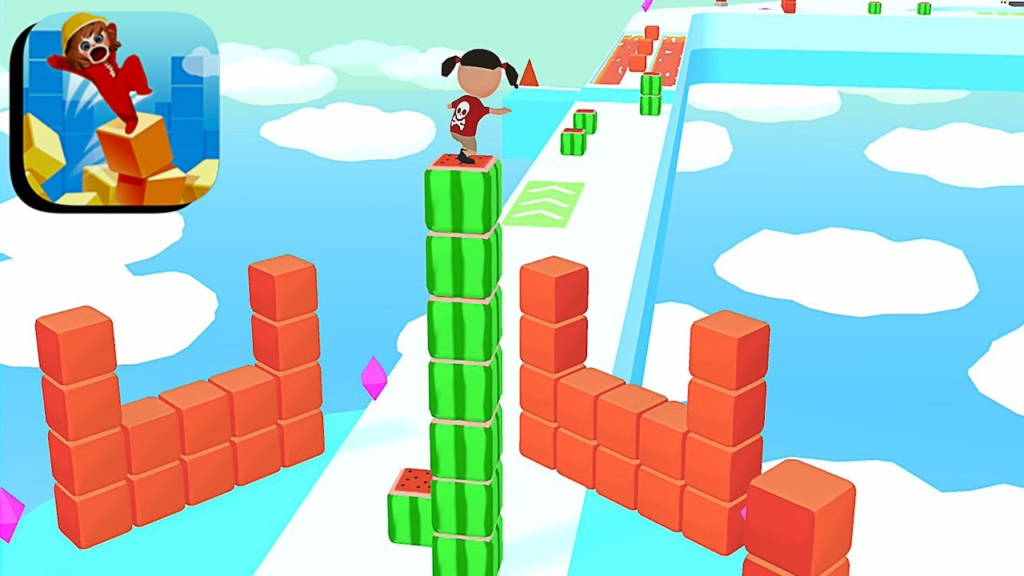
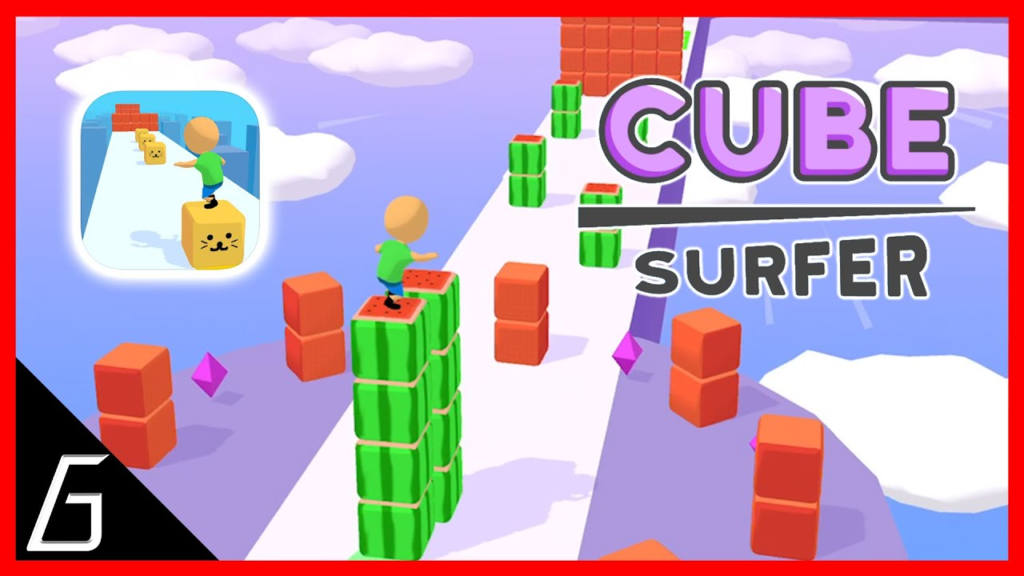
The defining feature that sets Cube Surfer apart from other runners is its stacking mechanic. As you travel along the track, you will encounter blocks of various colors. By guiding your cube over these blocks, you will automatically collect them, and they will stack on top of your character. With each cube you collect, your stack grows taller.
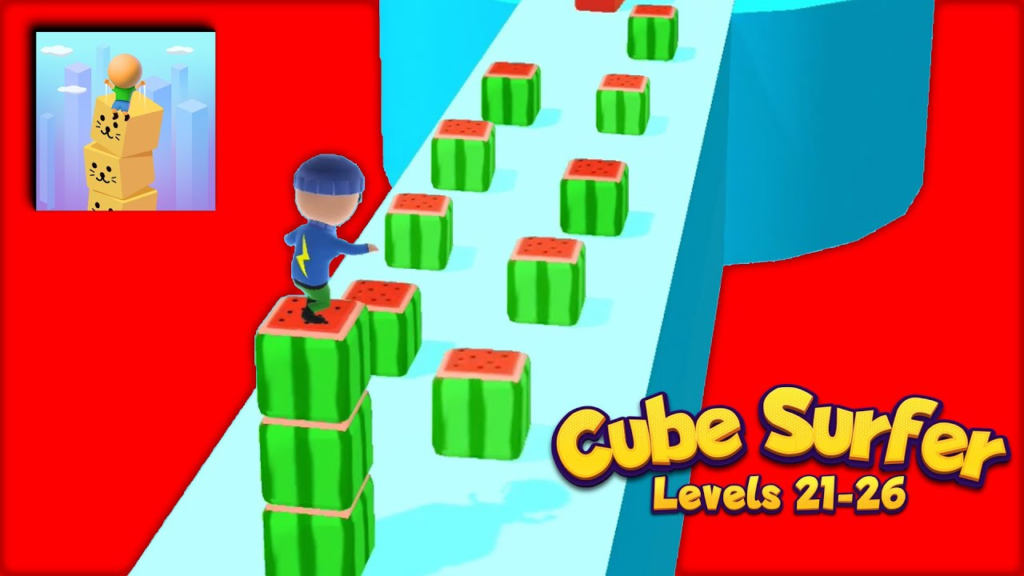
This mechanic serves several purposes within the game:
- Points and Progression: The primary benefit of a larger stack is that it increases your score. In many versions of the game, your final score is directly tied to the number of cubes you have collected.
- Protection: In some iterations, having a stack of cubes acts as a buffer. If you hit an obstacle, you might lose a few cubes from the top of your stack instead of instantly failing the level. This gives you a degree of error tolerance.
- Strategic Depth: This mechanic introduces a significant strategic element. You must constantly decide which cubes to chase and which to leave behind. Chasing a single cube might lead you into a dangerous area, and you have to weigh the risk versus the reward. A larger stack can also make you a bigger target, as you might be too tall to fit under certain barriers.
Navigating the Course: Obstacles and Challenges
The tracks in Cube Surfer are not just empty paths; they are complex courses filled with dangers designed to test your skills.
- Static Obstacles: These are the most common types of hazards. They can be walls, gaps in the path, or barriers that require you to move left or right to avoid them.
- Moving Obstacles: As you progress to higher levels, the game introduces more dynamic threats. These can be moving walls, spinning blades, or other hazards that require precise timing to navigate.
- Gaps: One of the most frustrating challenges is a gap in the track. If you don’t have enough cubes in your stack to build a bridge, you will fall and the run will end. This is a crucial part of the strategic depth of the game; you must have a sufficient stack to survive.
- Height Barriers: Some sections of the track will have low ceilings. To pass these, your cube stack cannot be too tall. This forces you to make a strategic choice: do you sacrifice cubes to fit under the barrier, or do you try to find another way around?
Mastering the Controls
The hallmark of a great mobile game is intuitive and responsive controls, and Cube Surfer excels in this department. The game is designed to be played on a touchscreen device, and the controls are as simple as they come: sliding your finger on the screen.
Touchscreen Controls (For Mobile)
The entire game is controlled through a single gesture: the swipe.
- Swiping Left/Right: Swiping your finger left or right on the screen moves your cube in that direction. The movement is fluid and responsive, allowing you to change lanes quickly and precisely to dodge obstacles and collect cubes.
- Swiping Up: In some versions of the game, swiping up will make your cube jump. This is essential for avoiding obstacles that are on the ground or for collecting cubes that are slightly elevated.
- Swiping Down: A swipe down can perform a slide or duck, which is necessary for passing under certain obstacles, particularly in the later levels.
The key to mastery is precision. A swipe that is too short might not move you far enough to dodge an obstacle, while a swipe that is too long might send you careening into another hazard. The game rewards players who can make quick, decisive, and accurate movements.
Keyboard Controls (For PC)
While Cube Surfer is primarily a mobile game, it is also available on PC and browser platforms. The controls here are typically translated to the keyboard.
- Left Arrow (A): Moves the cube to the left.
- Right Arrow (D): Moves the cube to the right.
- Up Arrow (W): Performs a jump.
- Down Arrow (S): Performs a slide.
The keyboard controls offer a different kind of precision. Instead of the tactile feel of a swipe, you get the binary input of a keypress. This can be an advantage for players who prefer more distinct, decisive inputs. However, it often requires a different kind of muscle memory than the touch controls.
Advanced Strategies and Pro Tips
While the basic controls are easy to learn, mastering Cube Surfer requires a more nuanced approach. Here are some advanced tips and strategies to help you climb the leaderboards.
1. The Art of Collection: Maximizing Your Stack
Your stack of cubes is your most valuable resource. It is your score, your shield, and your bridge. Therefore, collecting cubes efficiently is the most important skill to develop.
- Plan Your Route: Don’t just react to what’s in front of you; look ahead. Anticipate the path of cubes and plan a route that allows you to collect a large number of them without crashing. If you see a pattern of cubes, try to find the most efficient line through them.
- Prioritize Different Colors: In some versions of the game, different colored cubes might have different values or effects. Learn which colors are the most valuable and prioritize collecting them.
- Balancing Risk and Reward: A cube in a safe area is a gimme. A cube in a dangerous area requires you to assess the risk. Is it worth swerving into a dangerous lane to grab that one cube? Often, the answer is no, as the risk of ending your run is far greater than the reward of a single cube.
2. Navigating Obstacles: Timing and Precision
Obstacles are the primary threat to your run, and mastering them is essential for success.
- Learn the Patterns: The obstacles in Cube Surfer are not random. They follow distinct patterns. Once you play a level a few times, you will start to memorize the layout. Use this knowledge to anticipate hazards and move preemptively.
- Don’t Panic: When a series of obstacles comes at you quickly, it’s easy to panic and make a mistake. Take a breath, focus, and make precise movements. It’s better to make one accurate move than three panicked ones.
- The Slide and Jump: Mastering the jump and slide is non-negotiable. Many players neglect the jump, but it is just as important as side-to-side movement for collecting certain cubes and avoiding certain obstacles. Practice using all three movement options in combination.
3. Building Bridges: Surviving the Gaps
Gaps in the track are the most terrifying obstacles in the game because they are an instant death if you don’t have enough cubes.
- Always Have a Reserve: Never let your cube stack drop to zero. Always try to maintain a reserve of at least 3-4 cubes. This will give you a buffer in case you make a mistake or encounter a gap.
- Recognize the Risk: Before you enter a section with a gap, take a moment to assess your stack. If you don’t think you have enough cubes to build a bridge, consider taking a different route, even if it means sacrificing potential points.
- Sacrifice Strategically: Sometimes, you have to sacrifice cubes to fit under a barrier. If you anticipate a gap coming up, you might want to take a hit on a low barrier to reduce your height, rather than losing a much larger portion of your stack to a more dangerous obstacle.
4. The Flow State: Achieving Peak Performance
The ultimate goal for any Cube Surfer player is to achieve a “flow state.” This is a mental state where you are fully immersed in the activity, and your movements become automatic.
- Stay Focused: Distraction is the enemy of a good run. Put your phone down, find a quiet place, and focus on the game.
- Practice, Practice, Practice: The only way to achieve a flow state is through repetition. The more you play, the more the patterns will become ingrained in your muscle memory.
- Don’t Get Frustrated: Everyone makes mistakes. If you die on a level, don’t get angry. Learn from your mistake and try again. The best players are not the ones who never fail; they are the ones who learn from their failures and improve.
5. Level-Specific Strategies
As you progress through the game’s 10 levels, you will encounter new challenges. Here are some general strategies for different stages of the game.
- Early Levels: Use these levels to build a massive stack. The obstacles are easier, so focus on collecting as many cubes as possible.
- Mid Levels: Here, the obstacles get more complex. Start paying more attention to the layout and memorizing the patterns.
- Late Levels: These are brutal. You need to be perfect. Master all the mechanics we’ve discussed, and don’t be afraid to sacrifice a few cubes for a safer route.
The Appeal of Cube Surfer: Why It’s So Addictive
Cube Surfer’s success is not accidental. It is the result of a thoughtful design that taps into several psychological triggers that keep players engaged.
The “Easy to Learn, Hard to Master” Formula
This is the holy grail of game design, and Cube Surfer nails it. Anyone can pick up the game, start swiping, and have fun. The immediate feedback and simple controls lower the barrier to entry completely. However, achieving a high score or conquering the later levels requires significant skill, timing, and strategy. This creates a perfect “just one more try” loop, as you feel you are always on the cusp of a better run.
The Satisfaction of the Stack
There is an undeniable joy in watching your cube stack grow taller. It’s a visual representation of your success, and it provides a constant, tangible goal. This taps into the human desire for progress and accumulation. The high score isn’t just a number; it’s a towering monument to your skill.
The Visual and Audio Aesthetic
The game’s 3D graphics are clean, colorful, and charming. The cube art style is universally appealing and creates a sense of fun. The sound effects, from the satisfying “chunk” of collecting a cube to the tense sound of an obstacle approaching, are perfectly calibrated to provide feedback and enhance the immersion.
The Social Factor
Like many modern games, Cube Surfer often includes a leaderboard feature. This adds a crucial social element. You are not just playing against the game; you are playing against your friends and the global community. The desire to see your name at the top of the list provides a powerful, ongoing motivation to keep playing and improving.
The Evolution of Endless Runners
Cube Surfer is a proud member of the endless runner genre, a category that has become a cornerstone of mobile gaming.
A Brief History of the Genre
The modern endless runner genre was arguably popularized by a game called Canabalt. It featured a pixel-art character running on rooftops, and its simple, one-touch controls were revolutionary for the time. However, it was Temple Run that truly brought the genre to the mainstream, introducing 3D graphics and the “slide to control” mechanic that would become the standard.
The Rise of the 3D Runner
Temple Run and its successors, like Subway Surfers, set the template for the 3D endless runner. They featured a character constantly running forward, dodging obstacles, and collecting items. Cube Surfer is a direct descendant of this lineage, but it innovates with its unique stacking mechanic, adding a new layer of strategy to the formula.
What Makes a Great Endless Runner?
A great endless runner must have several key elements:
- Intuitive Controls: The player must be able to pick it up and play immediately.
- Procedural Generation: The levels should be random to prevent boredom and ensure replayability.
- A Clear Goal: The player needs a reason to keep playing, whether it’s a high score, unlocking a new character, or just beating their last run.
- Satisfying Feedback: Every action—jumping, sliding, collecting—needs to feel good. Visual and audio feedback are crucial.
Cube Surfer excels in all of these areas, which is why it has remained popular for years after its initial release.
Frequently Asked Questions (FAQs)
1. What is the primary goal in Cube Surfer?
The primary goal in Cube Surfer is to travel as far as possible on a 3D track while collecting as many cubes as you can. You must navigate a variety of obstacles, including walls, gaps, and moving barriers. Your final score is typically determined by the distance you cover and the number of cubes you have collected.
2. How do you control your character in Cube Surfer?
The game is controlled through simple touch swipes on a mobile device. You swipe left or right to move your cube across lanes, up to jump, and down to slide. This intuitive control scheme makes the game easy to learn for players of all ages.
3. What is the purpose of stacking cubes?
Stacking cubes serves a dual purpose. First, it directly increases your score at the end of a level or run. Second, your stack can act as a “bridge” to cross gaps in the track. If you fall into a gap, you will lose some cubes from the top of your stack. A larger stack provides a larger buffer against failure.
4. What are some common obstacles in the game?
The game features a variety of obstacles to challenge players. These include static walls and barriers that require you to change lanes, moving obstacles like spinning blades or shifting walls, gaps in the track that your cube stack must bridge, and low ceilings that require you to sacrifice some of your stack to slide under.
5. How many levels does Cube Surfer have?
Cube Surfer features 10 different levels that players can progress through. Each level offers a unique layout and a progressively more difficult set of challenges. Reaching the final levels requires mastery of all the game’s mechanics, including precise swiping and strategic cube collection.
Conclusion
Cube Surfer is a shining example of how a simple concept, executed with precision and charm, can become a gaming phenomenon. Its blend of intuitive controls, strategic depth, and addictive gameplay loop has cemented its place as a favorite among casual and dedicated gamers alike. The game’s success lies in its ability to offer a quick, satisfying experience that also provides a long-term challenge for those who seek it. You can play for five minutes or five hours, and both experiences will be equally rewarding.
The visual appeal, combined with the constant feedback of collecting and stacking, creates an experience that is as satisfying as it is engaging. Whether you are a newcomer to the genre or a seasoned runner, the game offers something for everyone. The “easy to learn, hard to master” philosophy is perfectly embodied, ensuring you always feel like your next run could be “the one.”
As you continue your journey as a cube surfer, remember the key lessons: plan your routes, manage your stack wisely, and never stop learning. With practice, you’ll find yourself navigating obstacles with increasing ease, achieving higher scores, and unlocking new levels. The path to becoming a champion is challenging but immensely rewarding. So, strap in, keep your eyes on the path, and start swiping. The world of Cube Surfer awaits, and it’s full of cubes just waiting to be collected.